
Sponsored posts can give an independent website a useful source of income, but the subject matter matters as much as the fee. Understanding which industries may be prohibited or restricted helps publishers protect reader trust, avoid policy problems and make better decisions before accepting an offer. There is no single universal list: laws, advertising rules and platform policies vary by country and channel. A practical starting point is to learn how to monetize a website with sponsored guest posts while setting clear editorial boundaries.
Why some sponsored topics carry more risk
A paid article can create legal or reputational exposure if it promotes an unlawful product, makes misleading claims or hides the commercial relationship. Risk also depends on the audience. Content aimed at children, for example, calls for particular care, while financial or health claims can influence decisions with serious consequences. Even if a business operates legally, its proposed copy may not meet the standards a publisher expects.
It helps to separate prohibited subjects from restricted ones. A prohibited category is one a publisher will not accept at all. A restricted category may be considered only after checks, edits, clear disclosures or confirmation that the content is lawful in the relevant market. A site should define both rather than treating every borderline pitch as a one-off decision.
Common categories to assess carefully
Publishers often place the following topics on a prohibited list or subject them to enhanced review:
- Illegal goods and services: offers involving stolen goods, counterfeit products, unlawful drugs or services that facilitate fraud should be rejected.
- Weapons and dangerous products: rules differ across jurisdictions, and content promoting access, use or sale can raise safety and policy concerns.
- Gambling and betting: licensing, age restrictions and advertising requirements vary. A publisher may decide not to accept these promotions, even where a particular operator is licensed.
- Adult content and sexual services: audience suitability, consent, age assurance and payment or distribution policies all need consideration.
- Financial products: investments, loans, cryptocurrency and debt-relief services may involve high-pressure tactics or claims about returns. Verify the advertiser and scrutinise every claim.
- Health products and treatments: unsupported promises, unsafe products and advice that could replace professional care can put readers at risk.
- Political or advocacy campaigns: these may require additional transparency and raise questions about impartiality, timing and who is funding the message.
This is a screening list, not legal advice or a complete catalogue. An industry can be lawful yet unsuitable for a particular publication. Conversely, a tightly controlled, factual article may be acceptable where a blanket ban is not required. The publisher’s audience, editorial purpose and local rules should guide the decision.
Build a review process before pitches arrive
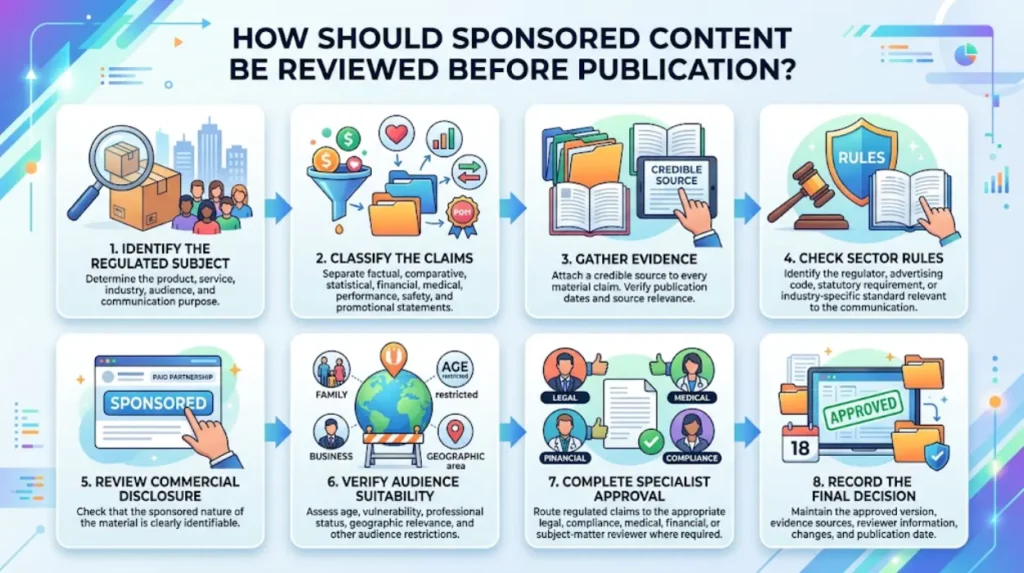
A written policy makes decisions more consistent. State which sectors are always declined, which require extra checks and what evidence an advertiser must provide. Include rules for claims, links, images, author identification and disclosure. Keep the policy accessible to anyone who handles sales or editorial enquiries, and review it when regulations or platform rules change.
For each pitch, identify the actual advertiser and the product being promoted. Ask who owns the business, where it is authorised to operate and which audience the campaign targets. Check that the proposed destination page matches the description in the pitch. If a claim relies on research, request the supporting evidence; if the copy promises a financial or health outcome, consider whether the evidence and wording are adequate. Do not rely solely on an agency’s assurance.
Editorial control matters, too. Set out in writing that payment does not guarantee publication and that the publisher can reject or revise copy. Require a clear disclosure that a piece is sponsored, placed where readers can see it. Disclosures should not be buried in a footer or phrased so vaguely that readers mistake paid material for independent reporting.
Protect the business without losing reader confidence
Sponsored content works best when it fits the site and offers readers something useful. A high fee does not compensate for a poor match, unsubstantiated claims or a link to a questionable business. Track accepted and rejected categories, keep records of checks and make sure commercial targets do not override editorial judgement.
Revenue planning also means budgeting for the publication itself. If you are building an ecommerce website for a small business, development costs, maintenance and content operations can all affect how much income you need. Osdire, for instance, connects buyers with freelancers across areas such as programming, design and marketing; comparing the scope of a project with its budget can help clarify those operating costs.
Ultimately, a clear policy is a business asset. It lets publishers assess opportunities quickly, explain refusals consistently and accept suitable work without compromising the site’s credibility. When a pitch falls into a restricted area, pause, verify the details and consider whether the likely benefit is worth the risk to readers and the publication.
